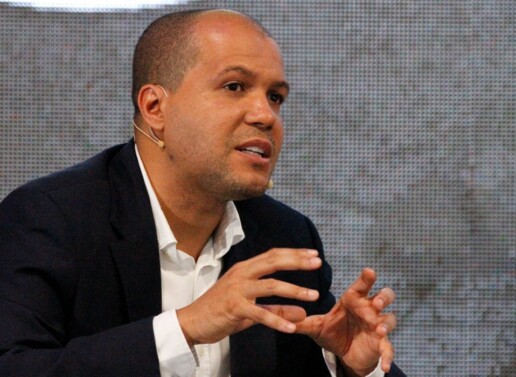
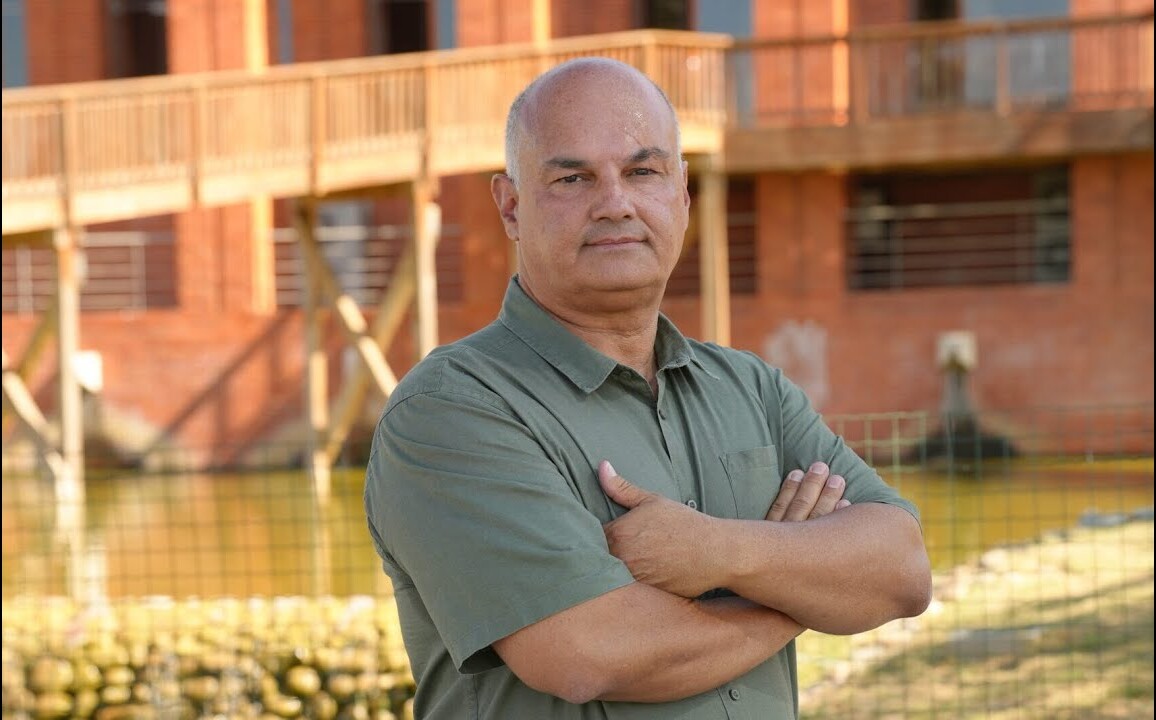
Agricultural value chains in Angola “are still not truly structured,” which makes the sector “unsustainable.” That is the assessment of agricultural consultant and manager Paulo Fardilha, of Global Wide Angola, who argues that more private investment, technical expertise and projects capable of linking production to markets are urgently needed to transform the sector.
In an interview with the newspaper Valor Económico, Fardilha pointed to excessive dependence on the State as the main obstacle to the country’s agricultural development. According to him, public support “often doesn’t arrive in time,” and farmers continue to lack distribution channels and guaranteed markets for what they produce. “Agriculture, like most of Angola’s economy, is still very dependent on State support, it’s still very centralised,” he said.
For the consultant, the solution lies in economic diversification driven by private investors, both Angolan and foreign, capable of giving rise to small and medium-sized enterprises and “anchor companies” that can serve as examples for the sector. Only in this way, he said, will it be possible to build a complete value chain, from production through to eventual export, “covering the whole process.”
Fardilha also warned about the competition between the prices of domestically produced agricultural goods and those of imported products, arguing that it is up to the State to regulate this market in order to allow domestic production to develop. Without such regulation and without “genuine diversification,” he stressed, large-scale supply businesses will remain hostage to the public sector, making it harder for strong, sustainable private value chains to emerge.
Asked about the lack of access roads, which leaves part of the agricultural harvest to spoil in the fields for want of transport, the manager acknowledged the problem but highlighted the country’s efforts to attract foreign investment and develop logistics platforms, citing the Lobito Corridor as an example.
Fardilha noted, however, that agro-industry remains “still very underdeveloped” in Angola. Without industries capable of processing large volumes of output, he warned, farmers will continue to lack the capacity to sell what they produce. “If there’s no agro-industry, there’s no point producing. Who are you going to sell it to?” he asked.
The consultant also identified a trust deficit between commercial banks and agricultural producers when it comes to approving and executing projects, which frequently end up unfinished. For Fardilha, the country lacks specialised agricultural consultancy able to give confidence to both project promoters and financial institutions. “Farmers also don’t know how to draw up projects, because that’s not their job (…) Banks, for their part, don’t understand agriculture either; they understand lending money,” he said, calling for greater technical support on both sides, as well as stronger technical and vocational training in the sector.
With around 90% of the country’s farms falling under smallholder/family farming, Fardilha considers it essential to gradually transform this model, with the emergence of small and medium-sized agricultural businesses that, over time, develop their own agro-industries. He drew a parallel with Portugal, where, he noted, family farming has “practically disappeared” over recent decades, with only around 5% of the population now linked to the sector.
The Global Wide Angola manager nonetheless expressed optimism about the country’s potential, arguing that Angola has the conditions to secure its own food security and, eventually, become an exporter of agricultural products — unlike Europe, since almost the entire territory allows for year-round production. He also referred to recent agro-livestock cooperation agreements between Angola and Brazil, suggesting that the country could replicate, with appropriate adaptations, Brazil’s model of rapid agricultural development. “If Angola wants to, in ten years it could be at a whole different level,” he said.
Asked about the risk of these major projects — both Angolan and Brazilian — failing to move forward, the consultant declined to comment on matters of a political nature, attributing the success of such initiatives to “political will” and to the creation of conditions capable of attracting foreign investment.
24/09/2026