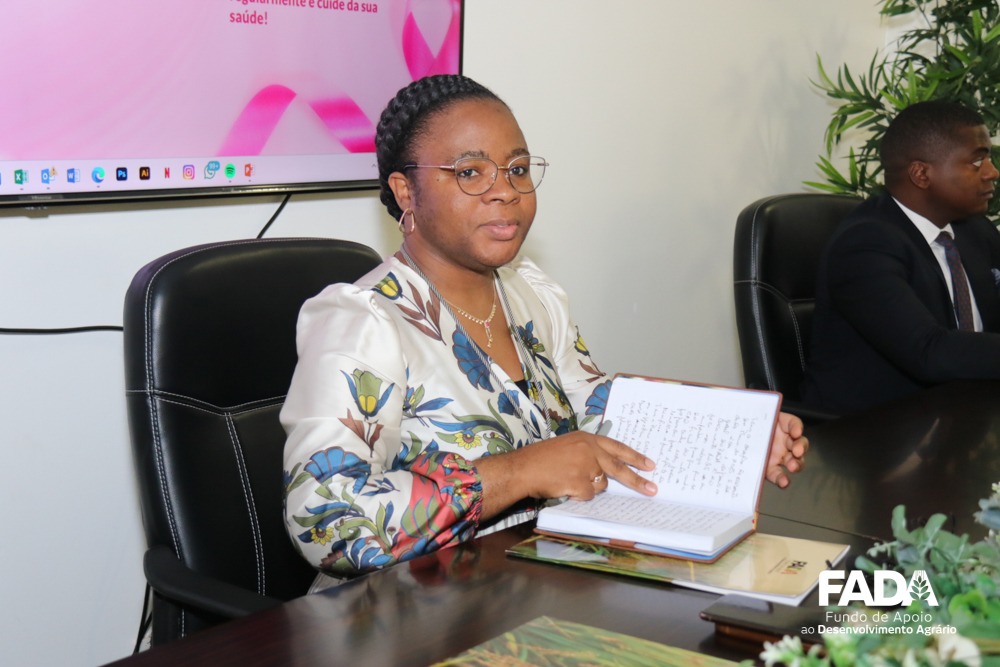
According to an investigation by the newspaper Valor Económico, the Agricultural Development Support Fund (FADA) is carrying loans granted in 2021 with no trace of the borrowers. KPMG audits of the 2023, 2024 and 2025 financial years, reviewed by the same newspaper, point to serious control failures in the FertilizaAngola programme.
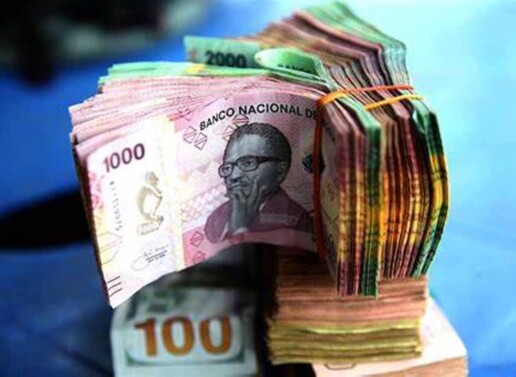
According to a Valor Económico investigation, the Agricultural Development Support Fund (FADA) is carrying more than 10 billion kwanzas (10.9 million dollars) in loans granted under the FertilizaAngola programme with no trace of its borrowers. As the newspaper found, the institution does not know who the defaulting beneficiaries are, what repayment deadlines were set, or even whether the fertiliser purchased was ever delivered to farmers.
The situation is documented in the opinions of the external auditor KPMG’s reports and accounts for the 2023, 2024 and 2025 financial years, to which Valor Económico had access. According to the newspaper, the irregularities detected by the consultancy firm led to a qualified opinion on the public institution’s accounts for three consecutive years. According to the audit cited by Valor Económico, the situation reveals a prolonged pattern of opacity in the management of public funds, marked by a total absence of warehouse inventory controls and serious errors in the accounting of State-granted subsidies.
Still according to the investigation, the origin of the funds dates back to 2021, when President João Lourenço authorised public spending of 17 billion kwanzas for the purchase of fertiliser on the domestic and international markets, intended to support the 2021/2022 agricultural campaign. Fertilisers such as NPK-12-24-12, ammonium sulphate and urea were purchased, with family farmers, whether or not organised into cooperatives and associations, envisaged as the main beneficiaries. In June of that year, the then Minister of Agriculture and Fisheries, António de Assis, stated, as quoted by Valor Económico, that farmers would pay only the price differential, with FADA covering the market value, with the aim of “making life a little easier for producers, particularly family farmers,” who had been affected that agricultural year by excessive rainfall, prolonged droughts and pest infestations.
According to Valor Económico, years after FADA put the funds into operation, the management of the goods and the whereabouts of the funds remain unaccounted for.
Valor Económico reports that, to operationalise State support for the 2021/2022 agricultural campaign, FADA created the FertilizaAngola programme. According to the same investigation, the initiative is entirely unknown to farmers’ associations and agronomists, with no record of its existence found even in Google searches. According to the newspaper, the only place where information about the programme exists is exclusively in the institution’s own reports and accounts.
Still according to Valor Económico, in the financial statements for that period, FADA financed 65% of the total value of the fertiliser purchases through the programme. Three years on, the outstanding balance remains “frozen” in the institution’s accounts with no supporting documentation: 10.28 billion kwanzas in 2023, 10.16 billion in 2024 and 10.17 billion kwanzas in 2025, figures cited by the newspaper based on the reports and accounts it reviewed.
According to the KPMG report cited by Valor Económico, although FADA’s management claims to have set up a team dedicated to reconciling the data in recent years, as of April 2026 no reliable information had been provided on the identity of the debtors, repayment schedules or contract maturities — an omission that, according to the audit, prevents verification of the real possibility of recovering these amounts. The auditor also stresses, according to the same source, that the Fund kept no records or minimum internal control procedures to determine the exact quantity of fertiliser purchased and actually delivered to farmers.
According to the Valor Económico investigation, the programme also stipulated that 35% of the funds made available by the Ministry of Finance would constitute a direct subsidy on the sale price of the fertiliser. However, instead of recognising this amount gradually in earnings as the products were sold, FADA kept 401.35 million kwanzas held as a liability between 2023 and 2025, distorting, according to the newspaper, the programme’s real impact on the entity’s equity and income statements.
In statements to Valor Económico, the director-general of Acção para o Desenvolvimento Rural e Ambiente (ADRA Angola), Simone Chiculo, said he was unaware of the existence of FertilizaAngola, expressing surprise that, despite having been involved in the country’s agricultural development for several years, he had never heard of an initiative under that name implemented during the 2021–2022 campaign. Chiculo told the same publication that he was only aware of the amount approved by the Government for the purchase of fertiliser, a process operationalised by FADA.
According to the statements reproduced by Valor Económico, the amount in question should be considered a non-performing loan, since the criteria for selecting beneficiaries were “quite dubious,” resulting in the goods resurfacing on the informal market. Chiculo admitted to the newspaper that he did not know how many small and medium-sized farmers had actually benefited, and argued that distribution should have been carried out through genuine farmers’ associations and cooperatives: “If delivery had been done through genuine farmers’ associations and cooperatives, it would be very easy to monitor the process in order to regularise the loan. However, since the distribution took place through dubious channels, it will certainly remain a kind of non-performing loan for many years to come,” he said, as quoted by Valor Económico.
Still according to the newspaper, the ADRA director argues that bodies such as Non-Governmental Organisations (NGOs) and the Institute for Agricultural Development (IDA) should have been the State’s main partners in selecting eligible farmers. In the same statements, Chiculo criticised FADA’s conduct, accusing the institution of dealing directly with business-scale producers based on unknown criteria, and linked the appearance of inflated-price fertiliser on the informal market to these irregularities: “If there’s anyone who honours these loans, it’s the small farmer. When they receive support, they pay it back, and when they don’t, they are easily traceable,” he told Valor Económico, describing the amounts involved as “frightening.”
Also speaking to Valor Económico, agronomist Fernando Pacheco said he was unaware of the programme but said he was not surprised by the volume of defaulted funds at FADA. According to the newspaper, the specialist strongly criticised direct intervention by public institutions in the purchase and distribution of fertiliser, arguing that such operations should be exclusive to the private sector.
24/09/2026