
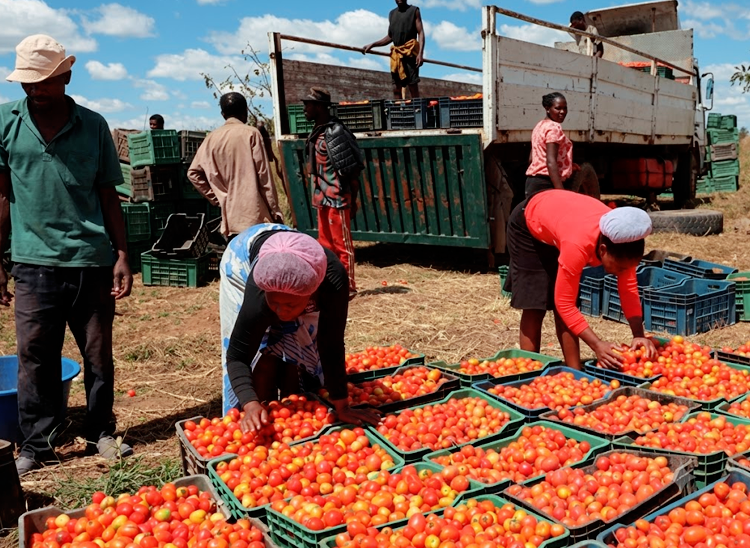
The measure takes effect in July and requires the presentation of tax documentation for the movement of goods in commercial quantities.
The decision by Angola’s General Tax Administration (AGT) to require tax documentation for the transportation of fish and agricultural products in commercial quantities is generating debate among farmers, who fear increased bureaucracy and potential obstacles to the marketing of domestic production.
The measure is contained in a notice issued by AGT’s Fifth Tax Region, according to which, from July 1, 2026, all transportation of fish and agricultural products in commercial quantities must be accompanied by documentation proving the origin and ownership of the goods.
The required documents include invoices issued through a certified system or printed invoice books, delivery notes, as well as the Tax Identification Number (NIF) of both the owner of the goods and the transport operator.
In the notice, AGT justifies the measure as necessary to prevent, detect, and suppress tax violations, a responsibility assigned to the Regional Tax Services under the Organic Statute of the General Tax Administration. The institution argues that stronger documentation controls will help ensure the traceability of goods in circulation and the tax compliance of commercial transactions.
The notice further warns that failure to present the required documents may subject offenders to the penalties established under Articles 198 and 202 of the General Tax Code, without prejudice to other sanctions provided for under applicable legislation.
Despite AGT’s justification, the measure has drawn criticism from farmers and stakeholders in the agricultural sector.
Among the critics is journalist and farmer Gustavo Silva, who argues that the requirement could disproportionately affect small-scale rural producers. In a post published on Facebook, Silva questioned how family farmers would be expected to prove the origin of products they grow and transport to markets for sale.
“If I grow tomatoes, cabbage, onions, or lettuce on my own farm, will I have to issue an invoice to myself to prove that the produce is mine?” he asked.
The farmer maintains that many producers are already registered with the tax authorities and comply with their tax obligations, arguing that the new requirement could become yet another obstacle for those who rely on small-scale farming to support their families.
Another concern raised relates to the enforcement of the measure. According to Gustavo Silva, questions remain regarding how inspectors will verify the origin of agricultural produce and what consequences farmers may face if they transport goods without the required documentation.
The journalist also questioned the existence of different tax requirements across regions of the country, advocating for greater uniformity in the tax procedures applicable to the agricultural sector.
16/06/2026