Data from Angola’s National Statistics Institute (INE), published by Economia & Mercado, show that only two out of every ten construction projects monitored during the period remained active.
Around eight out of every ten construction projects monitored in Angola during the first quarter of 2026 were suspended, according to data from the National Statistics Institute (INE) reported by Economia & Mercado.
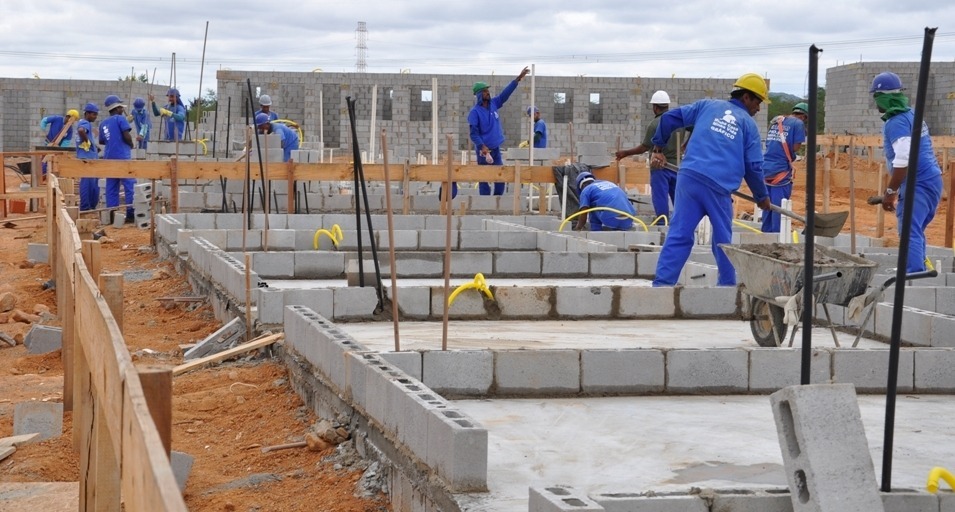
According to the Building Construction Monitoring Survey (IAEC), a total of 6,132 construction projects were recorded nationwide between January and March. Of these, 4,790 projects were suspended, representing 78.1% of the total, while only 1,342 projects, or 21.9%, remained under construction.
The figures also indicate a 23.22% increase in the number of projects surveyed compared to the fourth quarter of 2025, when 1,156 fewer construction sites had been recorded.
Among the projects still under construction, Cubango Province led the country with 195 active projects, accounting for 14.56% of the total. Cuanza Sul ranked second with 162 projects (12.06%), followed by Icolo e Bengo with 144 projects (10.70%).
On the other hand, Benguela recorded the highest number of suspended construction projects, with 1,046 sites at a standstill. Cubango, with 456 suspended projects, and Huíla, with 452, followed as the provinces most affected by construction stoppages.
According to the data cited by Economia & Mercado, most of the projects recorded were intended for housing purposes. Of the 6,132 projects surveyed, 5,140 were residential, 553 were intended for personal use, and 439 had mixed-use purposes.
The survey also shows that family-led construction projects continue to dominate the sector. Of the total number of projects recorded, 5,257 were carried out by families, while 582 were managed by professional builders or contractors, and 293 were undertaken by private companies.
Regarding the purpose of the buildings, 5,718 were residential projects, while only 414 were non-residential, including schools, hospitals, offices, commercial establishments, churches, hotels, and industrial facilities. Benguela led both the residential and non-residential categories.
In terms of construction materials, concrete and steel remained the most widely used structural components in residential buildings, featuring in 4,749 projects. Concrete blocks were the preferred wall material, while cement screed was the most commonly used flooring solution. Zinc sheets continued to be the most widely used roofing material.
The projects that remained active employed 3,702 workers during the period under review. Of these, 3,003 were permanent employees, 642 were subcontracted workers, and 57 were unpaid workers.
Average monthly labor costs reached 83.4 million kwanzas for residential projects and approximately 66 million kwanzas for non-residential construction projects, according to the INE report published by Economia & Mercado.
16/06/2026