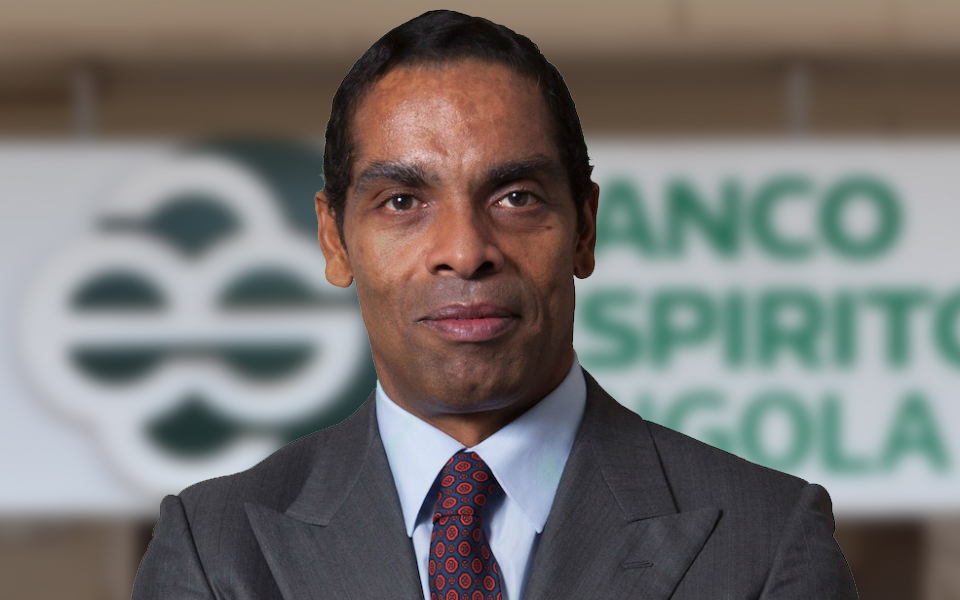
CNN Portugal has renewed focus on Alvaro Sobrinho and the disappearance of billions from BES Angola, reviving scrutiny of one of Lusophone Africa’s biggest financial scandals.
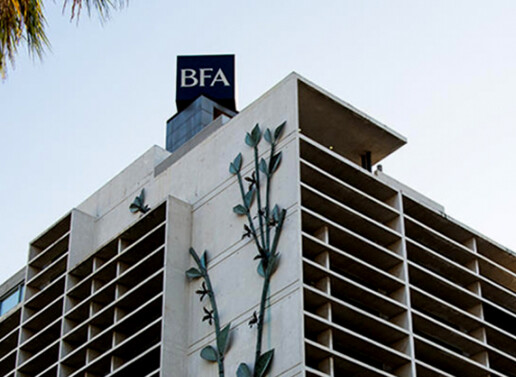
More than a decade after Banco Espirito Santo Angola collapsed and took billions with it, the questions have not gone away. CNN Portugal reported this week that investigators and court proceedings are again focusing on the disappearance of enormous sums from the Angolan subsidiary during the years when Alvaro Sobrinho ran it, renewing scrutiny of one of the most politically sensitive financial scandals in Lusophone Africa’s recent history.
Sobrinho served as chief executive of BESA until 2012, a period during which the Angolan operation expanded aggressively and became one of the most profitable arms of the wider Espirito Santo banking network. Angola was in the middle of an oil-fueled economic boom. Portuguese banks were chasing the country’s growth and its politically connected business elite with equal enthusiasm. BESA sat at the intersection of both.
When the broader Banco Espirito Santo group collapsed in Portugal in 2014, the Angolan subsidiary’s books became one of the most disturbing elements of the wreckage. Investigators found billions of dollars in loans that had been issued and never repaid. Some reports placed the total exposure at more than $5 billion. Questions immediately arose about whether the money had been channeled through unrecoverable credit facilities, opaque transactions or outright theft. No fully satisfying answer has been provided in the decade since.
Sobrinho has consistently denied wrongdoing. He has argued that he was unfairly blamed for a collapse driven by political and institutional failures well beyond his control. He was cleared in some proceedings connected to the wider Espirito Santo disaster, though other legal matters involving him continued in Portugal and Switzerland. His position has remained the same through each cycle of attention: he ran the bank, he disputes the characterization of what happened under his watch, and he has moved on.
Moving on has not been entirely straightforward. He built a post-BESA profile in private banking, media, telecommunications and sports, taking positions in Portuguese media companies and Sporting Clube de Portugal through investment vehicles connected to his network. He launched the Planet Earth Institute, a philanthropic organization focused on scientific development in Africa. In Mauritius, he presented himself as a pan-African business leader, attracting skeptical coverage from Mauritian media that tracked his activities closely. More recently, Portuguese media connected him to Operation Lex, an investigation into judicial corruption in Lisbon, reporting that he is suspected of paying a Lisbon appeal court judge to release an 80 million euro property portfolio that prosecutors had seized.
The CNN Portugal report this week does not represent a single new legal development. It represents something that can be equally uncomfortable: a return to the core question that has never been cleanly resolved. Where did the money go, and who benefited?
The broader context of the Espirito Santo collapse gives that question its weight. Former BES chairman Ricardo Salgado has faced multiple legal proceedings connected to the group’s downfall. Authorities in Portugal and Switzerland have spent years untangling a web of subsidiaries, offshore entities and politically connected borrowers. The Angola dimension proved particularly sensitive because of the intimacy of the relationship between Portuguese financial institutions and Angola’s ruling elite during the boom years. Critics argued at the time, and have continued to argue since, that weak oversight and political influence created the conditions for the kind of lending that hollowed out BESA.
Angolan authorities eventually restructured the bank into Banco Economico following recapitalization efforts supported by Angolan investors and the state. The intervention was designed to contain wider damage to Angola’s financial sector at a moment when falling oil prices were already creating economic pressure. It stabilized the system without answering the question of accountability.
That question keeps surfacing because the scale of what happened at BESA demands it. Billions of dollars in loans to poorly documented borrowers, often with political connections, issued through an institution that expanded faster than its risk controls could follow. The institutional explanation, that BESA was a product of its environment, leaves open whether individuals bear personal responsibility for specific decisions and specific transactions.
Portuguese prosecutors and financial investigators have revisited BESA transactions multiple times as other Espirito Santo proceedings moved through the courts. The pace has been slow and the outcomes partial. The CNN Portugal report this week suggests the revisiting is not over.
Sobrinho’s name will remain part of that story as long as the underlying questions remain unanswered. He led BESA during the years that matter most. Whether investigators can eventually produce specific findings that go beyond what has already been established in more than a decade of proceedings is the question that hangs over the renewed attention.
Billionaires Africa, 14/05/2026