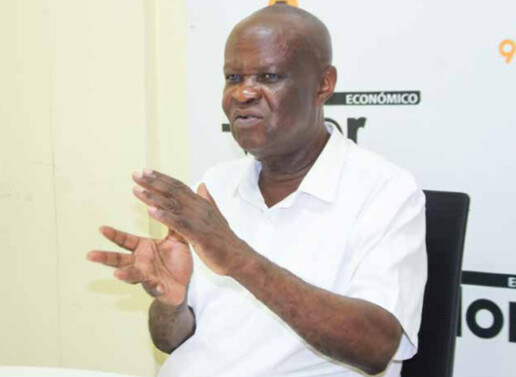

Agronomist Fernando Pacheco argues that the Angolan Government “is not making sufficient investment in improving the capacities of Angolan entrepreneurs,” a situation which, he says, has hindered the development of the agricultural sector and prevented the national economy from reducing its dependency on imports.
The statements were made in an interview with Valor Económico, in which the specialist advocated for structural reforms, technical training, and a new strategic vision for agriculture.
Pacheco states that for decades Angola has spoken about its agricultural potential but has failed to act accordingly. He explains that family farming — responsible for a large share of the country’s production — remains marked by low productivity, lack of technical support, and the absence of consistent public policies. “We make good speeches, but then fail to implement what is said,” he laments.
The agronomist also criticizes the shortage of qualified technicians. He notes that although there are agricultural institutes and faculties, the number of graduates and the quality of training do not meet the real needs of the sector. “The graduates we produce do not have sufficient knowledge to address the problems of our agriculture,” he stresses, recalling that several institutions have publicly acknowledged this incapacity.
Pacheco argues that the Government has failed by prioritizing large investments in international consultancy and large-scale projects instead of strengthening local structures such as the Agricultural Development Stations. In his view, without technicians in the municipalities, continuous assistance, and coordination between resources, logistics, and financing, national agriculture will continue to grow slowly.
The engineer further points out that the country does not have a “functional market,” since the import and distribution of agricultural equipment is centralized by the State, which distorts prices and reduces efficiency. He maintains that the solution lies in integrated policies rather than isolated measures. “The problem is not solved by the minister; it is solved by a set of policies that must be designed and implemented,” he affirms.
Although acknowledging that the current Executive has given greater visibility to the sector, Pacheco says this has not yet translated into effective improvements. He criticizes the lack of evaluation of State-funded projects and the failure to implement recommendations arising from the few evaluations that do occur.
For the specialist, Angola must invest in training agricultural entrepreneurs, create attractive conditions for retaining qualified staff in the municipalities, and adopt technologies suited to the country’s conditions, including low-intensity methods used in Asian nations. Otherwise, he warns, “it is not possible to think about large-scale agriculture.”
Pacheco concludes that agricultural development will only be achieved when several ministries — not just the Ministry of Agriculture — adopt coordinated policies with a national strategic vision. “If ministers do not breathe agriculture, we will not move forward,” he states.
12/10/2025