At an auction that registered 452 head of cattle and 288 sheep, with business worth 299.2 million kwanzas, producers are calling for specific tax legislation for the livestock sector, arguing that “high” costs and long production cycles put domestic farming at a disadvantage compared with imports and the “simple” trading of goods.
The Southern Angola Cattle Farmers’ Cooperative (CCGA) is calling for a specific tax regime for livestock farming, arguing that high production costs and long rearing cycles leave domestic producers with a cost structure that cannot be compared with that of import and simple trading activities.
The position was put forward after the Huíla agricultural and livestock fair and auction, where farmers argued that taxation applied to the sector must take into account the time needed to produce and to recover investments.
According to the cooperative, livestock farming involves continuous spending on feed, water, medicines, transport and other production inputs, which can exceed 25 million kwanzas before an animal reaches the market. The cooperative’s chairman, Carlos Damião, believes this difference should be taken into account when defining tax obligations, since livestock producers bear costs for long periods before generating any revenue.
“Importing and selling is one thing, rearing is another,” he said, comparing livestock farming with import operations in which capital can be recovered over a much shorter period. In his view, there should be specific tax legislation for livestock farmers, given that production cycles vary significantly from species to species.
While cattle may require at least two years before they can be sold, pigs can take between eight and 10 months, sheep six to eight months, goats seven months and poultry three months.
In the case of cattle transport, Carlos Damião notes as an example that moving animals between certain areas can cost around 200,000 kwanzas per trip, reaching approximately 400,000 kwanzas for the round trip.
These charges, combined with other farming costs and the tax burden, reduce producers’ income margins. Water availability also remains one of the main concerns of farmers in the south of the country, two weeks after the World Food Programme (WFP) and the Food and Agriculture Organization of the United Nations (FAO) forecast a worsening of the effects of the El Niño phenomenon.
The cooperative believes the sector’s main difficulty lies not only in the availability of pasture, but above all in regular access to water.
The Huíla agricultural and livestock fair and auction brought together traditional producers from the provinces of Cunene, Huíla and Namibe, who form the core of the Southern Angola Cattle Farmers’ Cooperative.
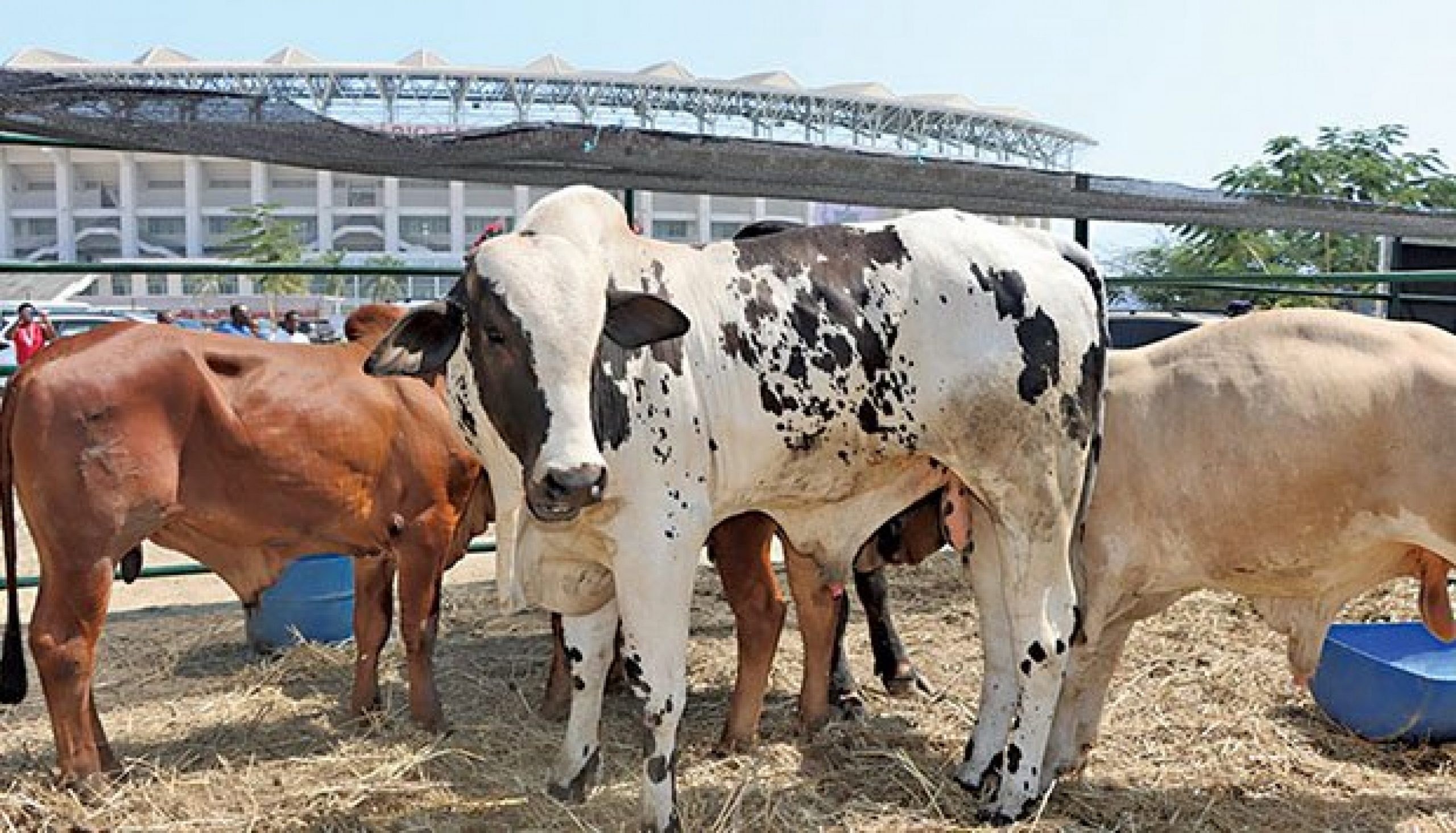
The survey carried out during the fair counted 452 head of cattle, of which 252 were sent to auction, while around 200 remain on display. In the sheep segment, 288 animals were present, with 208 earmarked for auction and 80 kept on display.
The auction moved around 299.2 million kwanzas, while the fair’s overall business volume was estimated at approximately 600 million kwanzas, according to figures presented by the cooperative.
Jornal Valor Económico, 26/08/2026